Nicely’s Appeal Explained

You can’t beat a good Venn diagram can you? Still love a good Venn diagram – and it’s the perfect method for explaining the appeal of ‘Detective Strongoak’ to readers of fantasy, comedy and detective fiction. So here we go:

The Appeal Of Detective Nicely Strongoak to Different Fiction Readers.

So there we are! Very informative, I’m sure you’ll agree and clearly illustrating the target audience! Just about everybody who likes a good book! Continue reading Nicely’s Appeal Explained

My Funniest Joke Ever (as a scientist)

Comedy writers do actually get asked to say something funny at parties (not actually to write something funny, but say something funny – which isn’t that fair; I mean a racquet manufacturer isn’t expected to win Wimbledon!

Or at least I do; get asked to say funny stuff – not to win Wimbledon that is.

‘Come on what’s the best joke you’ve ever written?’

“Sorry, don’t really write jokes.”

‘What!’

‘I prefer commenting on the human condition obliquely using humour.’

‘Yeah, right. Can I hit you?’

Strangely, when I was a full-time scientist, I never got asked what the best science I ever did was. That would have been easy: coming up with the constitutive-like secretory pathway for the release from the human heart of Atrial Natriuretic Peptide.

funny cartoon scientist

It’s a belter, eh?

Part of the problem with finally admitting to what I consider to be my funniest joke ever, was that it was actually said in a laboratory! It’s a science gag!

It was while I was doing some work on Marfan Syndrome. This is an inherited  genetic condition affecting connective tissue and sufferers are typically very tall with long fingers. Abraham Lincoln may have had the condition, as might Mary Queen of Scots and Sergei Rachmaninoff (as a pianist he had a tremendous ‘span’).

The compromised connective tissue protein is called Fibrillin and it first was isolated from a medium of human fibroblast cells, following electrophoresis after di-sulpide band reduction, which produced a nice distinct single band of 350 KD (not small). Because connective tissue occurs throughout the body there are many distressing and life- threatening problems associated with Marfan Syndrome including degeneration of the heart valves. I was assisting on a project investigating the ultrastructure of Fibrillin in Marfan patients and control subjects. Specifically I was training up two young technicians to ‘rotary shadow’ isolated ‘patient’ fibrillin. This technique involves making a high resolution heavy-metal ‘replica’ of rapidly frozen and freeze-dried macromolecule in a vacuum evaporator. It is not the very, very most demanding of electron microscopical techniques, but there is plenty or room for error.

It was not going well.

Or rather, we were obtaining images from the control fibrillin – which are particularly lovely with a bead-on-string arrangement of fibrillin along the long microfibril. However we were not having any joy with samples from the Marfan patients, which obviously were in rather shorter supply. We wanted some action! We all, after all, wanted to do out bit to help combat this rotten inherited disease!

Was it an isolation problem actually associated with the putative problem with the fibrillin microfibril itself? We didn’t know.

Every other day a new isolated sample would be rotary shadowed, and the delicate replicas teased up on a grid to be put in the electron microscope; the three of us huddling around in the dark looking at the screen for some sign of the elusive molecule.

And every other day disappointment.

And then one day it all came together – as it can do in science for no particular reason. There on the screen was a sample of the ‘Marfan’ fibrillin. The normally intact microfibril was ragged, flayed almost; the beads disrupted.
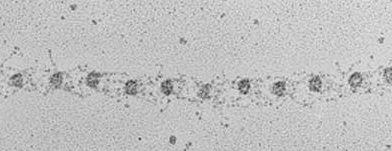
fibrillin

‘Look at the state of that,’ I said to the two young technicians: ‘it’s the parents I blame.’

All right then, please yourselves.

Continue reading My Funniest Joke Ever (as a scientist)

For anybody considering writing for theatre: Things Theatre Writers Should Know

Theatre Advice 3The full advice, before you start writing for theatre:

  • Sadly directors are not there to get your ‘vision’ on stage in an unadulterated form – many have thoughts of their own. Live with it.
  • Actors are not wet-props. Some have thoughts and feelings like regular people do.
  • You will rarely get the credit, but some directors will always try to give you the blame (even if they rewrite your script).
  • Putting on a play is very much a group activity, but you’re not really in the group (most of the time).
  • Part of your job is to present your work in a properly formatted fashion with clear and precise stage directions. Your genius is more recognisable that way.
  • Do not expect to live on what you earn as a theatre writer, get yourself a proper job too.
  • It’s all right to say ‘I’ve got a new play on’, just not in the presence of anybody else involved in the production.
  • Writers are not meant to marry actors. It’s a matter/antimatter thing.
  • If you want to work with professionals, act like a professional – sorry, be a professional; never act at all. That’s not your job.
  • Theatre writers are not restricted to just writing plot and dialogue. If you really, really believe it is truly important that somebody should enter STAGE LEFT say so, but don’t be an arse about it.
  • You are not writing a radio play – think visually.
  • You are not writing a film script either – don’t think that visually.
  • If you require lavish sets marry well.
  • Never tell anybody with a manual occupation, or working in public services, how hard your job is.
  • Awards don’t matter until you get one.
  • Never trust anybody who says you can make money at the Edinburgh Fringe, unless they sell fast food.
  • Most critics are only human.
  • The show does not have to go on, get a sense of perspective – other people have lives too.
  • Producer is a job too.
  • Never be the last one to stop clapping at your own show. Continue reading For anybody considering writing for theatre: Things Theatre Writers Should Know

Did I blink and miss them?

One thing I didn’t quite get about ‘The Shanara Chronicles’ – as clearly stated in the opening credits:

Shanara opening creditsA distinct lack of ‘Dwarf’ . That’s the sort of thing that annoys a certain dwarf Master Detective. Are the elves to blame?

Continue reading Did I blink and miss them?

Excellent Empire Magazine June ‘Ghostbuster’s’ Cover

Yes, the subscription cover offers loads of uses for blatant self-publicity! Such as:

Slimer on Nicely

Well, you have to do it, don’t you?

Continue reading Excellent Empire Magazine June ‘Ghostbuster’s’ Cover

Next book news – soon!

We’re all hoping to give you some news very soon about the latest Nicely Strongoak adventure. It’s all written and has a great title too, which of course I can’t tell you – battle axes might have to be hefted. What I can tell you is that it’s got even more dwarf detective shenanigan’s and wisecrackery – as well as some great new suits. You’ll learn more about the Citadel and Widergard too, but nothing more about surfing and very little about house prices on the Third Level, although they are extortionate now.

We all want to know!

So, keep your eyes and ears open for word on the sequel to the Epic Fantasy #1 Bestseller – very soon, we all promise you.

Continue reading Next book news – soon!

Spoiler Alert!

Spoilers are called ‘spoilers’ because they spoil things. If you let a ‘spoiler’ out of the bag you are going to spoil something for somebody. It does not make you clever or cool to know something and then tell everybody else, it makes you a total d*ck. So thanks newspaper writer who started his bit of smug smart-arsery with ‘as everybody must know by now…’ – no I didn’t!

This is a DUCKhead
This is a DUCKhead

I can’t afford Sky you see because nobody pays me to write drivel for a national newspaper and I have only just bought the physical DVD box set, because it has just been release and I was enjoying it – immensely. Now you have spoiled it for me. Because that’s why they’re called SPOILERS and that’s why nice people write things like SPOILER ALERT above their articles.

So thanks newspaper writer: d*ckhead

Continue reading Spoiler Alert!

The Devil is in the Decal.

I love decals. I even love the word decals. I especially love the fact that the word is derived from decalcomania. What a fab word that is too! ‘Transfers’ just isn’t in the same league, sorry.

I especially love vinyl-cut-decals, that’s the peel and stick sort, but I have a problem and it’s this. I like them so much that I can’t peel and stick them, or rub over the dry transfer sort with my biro. I also loved Letraset you see (dry-transfer lettering – other makes are available, probably. Heck I don’t even know if you can still get Letraset!), I just hated to use them. I loved the unsullied, unused sheet. I just like to stare at them! I did it when I was a kid with a sheet of fabulous different trees – just couldn’t stick them down.

comic book rift wars


You see, while the decals are still there on that sheet the possibilities are endless! So many eventualities to be explored and imagined, scenarios to be worked out – and while that’s the case then Schrödinger’s cat is both still alive and dead! The waveform hasn’t collapsed, hurrah!

The same is true with my stories and plots. I carry a lot of ideas around in my head and I explore the different possibilities, varying different scenes and thinking about other eventualities.

Press or stick them down and the cat’s dead or alive. Of course, you have to do that with stories in the end, which is almost kind of sad, but that’s what a story is.

You don’t have to do it with decals!

And this is why I have I still have a reasonably ‘mint’ Worlds Collide Number 1 July 1994 DC/Milestone Comics in printed plastic bag with decals – that have never been used. I could have adorned my cover with my own punch-ups but couldn’t have unpeeled the superheroes to save my life.

Continue reading The Devil is in the Decal.

Me and Tom Stoppard

As a jobbing writer, for all sorts of different media – but mostly now for film and books, ideas I pick up from each of the different skills inevitably inform each other. How useful this might be is debatable. Shouldn’t you stick with one form of writing? Certainly a lot of agents aren’t happy to represent writers who aren’t specialists. I know this because a top agent once told me at a Writer’s Guild meeting that I was ‘too unspecialised’.

website page

This was quite distressing for me to be told because, to be honest, I hadn’t given up science to simply become a one trick pony – even a great one. I wanted to write what I wanted to write: animation, musicals, books, you name it! I may not succeed, but at least I would try.

In a state of gloom I picked up the newspaper the next day and, coincidentally, I read an article by the great playwright, TV, radio, and film writer and novelist, Tom Stoppard. In it he addressed the subject of writing for different media and he concluded: ‘it’s all writing’.

So, I’m with Tom Stoppard – thanks Tom! – and here are a few thoughts that I had about creating great fantasy characters for film and for books that I wrote for the Harper Voyager blog.

Continue reading Me and Tom Stoppard

Mad March Madness!

Yes, Mad March err Madness! Lucky USA! ‘Detective Strongoak and the Case of the Dead Elf’ (former Kindle Epic Fantasy #1) is on esale for $1.99 until March 14th and this time B&N too and some more sellers … I think.Detective Strongoak book cover with banner

Continue reading Mad March Madness!