The Genome Wager – scenes from an Italian restaurant.

There is something quite remarkable waiting, biding its time, in the cellars of the UK’s Wine Society. Actually I’m sure there are numerous remarkable things in the cellars of the Wine Society and sure as Alan Sugar, I’m not going to taste any of them!

In principle the bet sounds quite simple. Professor Lewis Wolpert has bet Dr Rupert Sheldrake that by May 1, 2029, given the genome of a fertilized egg of an animal or plant, we will be able to predict in at least one case all the details of the organism that develops from it, including any abnormalities.

Sounds reasonably straightforward eh? I mean, given the rate that our understanding is growing this must be a distinct possibility. Genomics, the study of an organisms entire hereditary mechanism is a burgeoning area of research and is producing astounding results – such as the much trumpeted identification of the human DNA nucleotide sequence in 2007. Alongside genomic research we have major strides taking place in proteomics, the study of the proteome (the set of proteins expressed by any cell at a particular time under particular conditions). New advances in methodology and technology, such as Ultrahigh and Ultra Performance Liquid Chromatography (UHPLC and UPLC) threaten to accelerate the pace of research by offering higher throughput and better and ‘cleaner’ data for genomic and proteomic research.

So what’s the bet about? Is it just a case of: ‘if not then, then later?’

What is Rupert Sheldrake’s beef?

Continue reading The Genome Wager – scenes from an Italian restaurant.

The Natural History of Elves, Dwarfs, Men, Goblins, Gnomes and Trolls

The Paleoanthropological Relationships That Exist in the Hominini Lines of Middle-earth like Fairylands

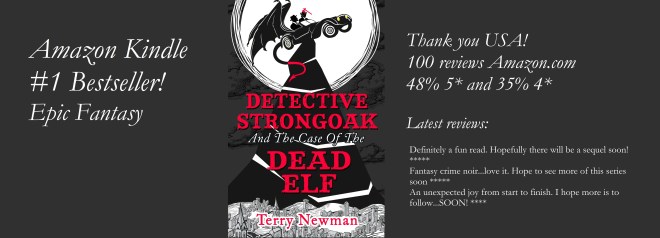
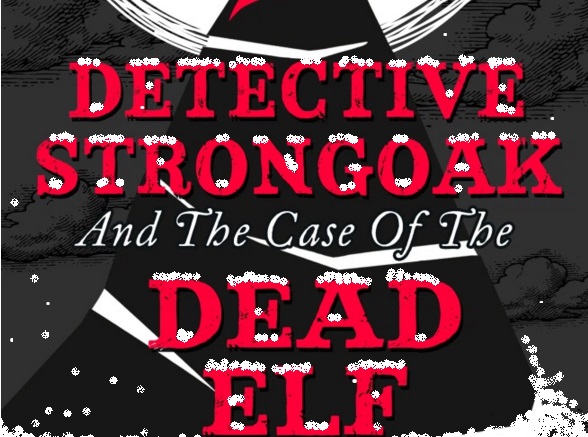
The current resurgence of interest in the more recent history of worlds like Middle-earth, (often classified as Fairylands) in books such as ‘Detective Strongoak and the Case of the Dead Elf’, has come at a time when academic research into the field has also never been more fertile. Perhaps the productive area of investigation has been in the understanding of the Paleoanthropological relationships that exist in the Hominini lines of ‘Fairyland’ and how they relate to what is known about our own (Homo sapiens) developmental history. This article will give a necessarily brief review of thinking in the field and highlight some of the more interesting ramifications especially as they relate to Widergard.
detective-strongoak-cover-and-bestseller-100-reviews

No Fairies in Fairyland
The name of Fairyland is of course a misnomer and harks back to a period when our limited level of understanding of the Realm lead to several suspect classifications of the Hominini species present, including the rather nebulous class referred to as ‘fairies’ – a rag-bag group which could include elves, ‘pixies’ and even gnomes. It is interesting that although current revisions have excluded this division, the name ‘Fairyland’ still remains a useful reminder that there does exist a large body of study of the realm that predates the admittedly revelational works of modern authors. Whether it’s called Fairyland, or indeed other names, places such as Widergard continue to fascinate.

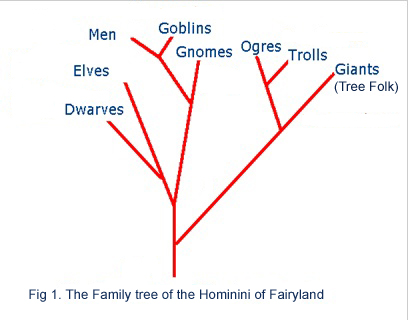
The family tree of the Hominini of Fairyland is given in Figure 1. Although some parts of the relationships are perhaps more controversial and speculative than others, particularly in the dating of the divergence of the dwarf/elf branch from that of gnomes, goblins and men, in general it provides a useful framework for further discussion.

Fairyland figure 1 copy

Continue reading The Natural History of Elves, Dwarfs, Men, Goblins, Gnomes and Trolls

What’s in a Number?

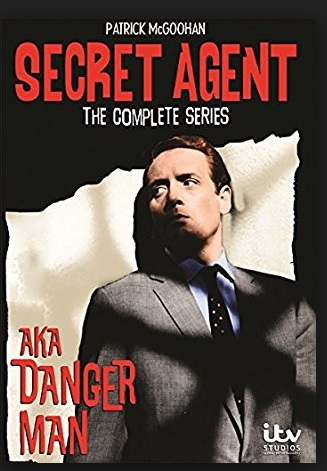
Writing recently about ‘The Prisoner’ recently I forgot to mention that Patrick Mcgoohan’s previous incarnation as John Drake, ‘Danger Man’, was known, for reasons I never quite worked out, as ‘Secret Agent’ in the USA. Probably broadcast elsewhere by this name as well – maybe.

I thought it would be jolly to have a listen to the opening credits, because ‘Danger Man’ had one of the best themes ever! All praise to the late Edwin Astley, who also wrote the theme for ‘The Saint’. No way could ‘Secret Agent’ beat that! It couldn’t, of course, but I did recognise the theme as the song ‘Secret Agent Man’ sung by Johnny Rivers and written by P. F. Sloan‎and Steve Barri (of ‘Eve of Destruction’ fame).

When it got to the chorus I sort of stopped and my heart skipped a beat (didn’t really).

Here it is:

“Secret agent man, secret agent man
They’ve given you a number and taken away your name.”

So, the question must be: was the whole of ‘The Prisoner’ inspired by the lyrics of ‘Secret Agent’, the American name for ‘Danger Man’?

To is there something else we don’t know about going on here? Continue reading What’s in a Number?

21st Century Schizoid Man – I am not a number!

‘The Prisoner’ was a 17 episode television series broadcast in the UK in 1967. Wow, that makes it 50 years old. Wow, that makes me old too!

Co-created by its star Patrick McGoohan, combining spy fiction with fantasy, science fiction, allegory and psychological drama, there had been nothing like it before and probably very little like it since. After the airing of the far from illuminating last episode people wandered the street looking dazed and confused for days.

Or maybe that was just me.

I loved it, partly because I had been a huge fan of Mcgoohan’s previous secret agent series ‘Danger Man’ and partly because it had just about everything the younger me liked at that time. No breasts, so ‘Game of Thrones’ is ahead there. (“Oh grow up Dr Tel!” “No, won’t! Tried it, didn’t like it!”)

The good news is that it is currently getting an airing on the ‘True Entertainment Channel’ for those that have Freesat (and heaven’s knows what other providers.) I caught up with an episode last night and the even better news is that it hardly creaked at all!

What is more, back in 1967, some genius had decided to film the series in a widescreen format. I was literally seeing more ‘Prisoner’ than ever!

I never knew that. The Wiki document says it was filmed in 4:3 picture format. It fitted my 16:9 TV beautifully! Portmeirion, the ‘Italianate’ Welsh resort village had never looked better. It was one of my favourite episodes too: ‘Schizoid Man’, which is very close to one of my favourite songs of all time ‘21st Century Schizoid Man’ by the ‘mighty’ King Crimson, also produced in the late ‘60s. (Yes, I do have favourites from other eras too!). I am writing a TV series for a European Production company, guess what it’s going to have lots of in it? Fantasy, science fiction, allegory and psychological drama – if I can convince them.

And then it occurred to me last night, for the first time I was watching ‘Schizoid Man’ in the 21st Century! I’m not saying the thought ‘blew my mind’, but it got me typing this morning!

Catch up with both of them if you can.

Continue reading 21st Century Schizoid Man – I am not a number!

Writing – it’s a funny business (or not)

An update on the next Detective Strongoak novel.

Those of you who have been paying attention will know that ‘Detective Strongoak and the Case of the Dead Elf’ was a #1 Kindle Bestseller in the Epic Fantasy genre. It has sold some 5300 ‘units’, which is pretty good for a book published initially as an ebook with a Print On Demand paperback only coming out some months later.

It’s also had some 120 Amazon reviews with an average of something like 4.3 Stars!

Thanks for that everyone!

Sadly the road to publishing continuity can be a bumpy one. Suffice to say, the next Nicely novel has been completed – as has number 3!

I am hoping that they will be with you ASAP.

In the meantime there is a co-written SF comedy coming your way soon with fantastic cover art and an accompanying – Ok, can’t tell you that!

Hopefully some of you have had a chance to see and listen to some of my work on the feature film ‘Chasing Robert Barker’, which is available on Video On Demand services like itunes and Amazon.

Plus I have started work on a game story for a fantastically talented writer/artist/game maker. That’s going to be a more long-term project, but it’s just phenomenal – already!

That’s just how writing goes sometimes, but it beats working for a living. Continue reading Writing – it’s a funny business (or not)

The Writer’s Dog

Kurt Vonnegut had Pumpkin. Neil Gaiman had Cabal. John Steinbeck had Charley and was so fond of Charley that he went on a road trip with him, which he wrote up in a book entitled ‘Travels With Charley’; a title which didn’t even raise a snigger back then.

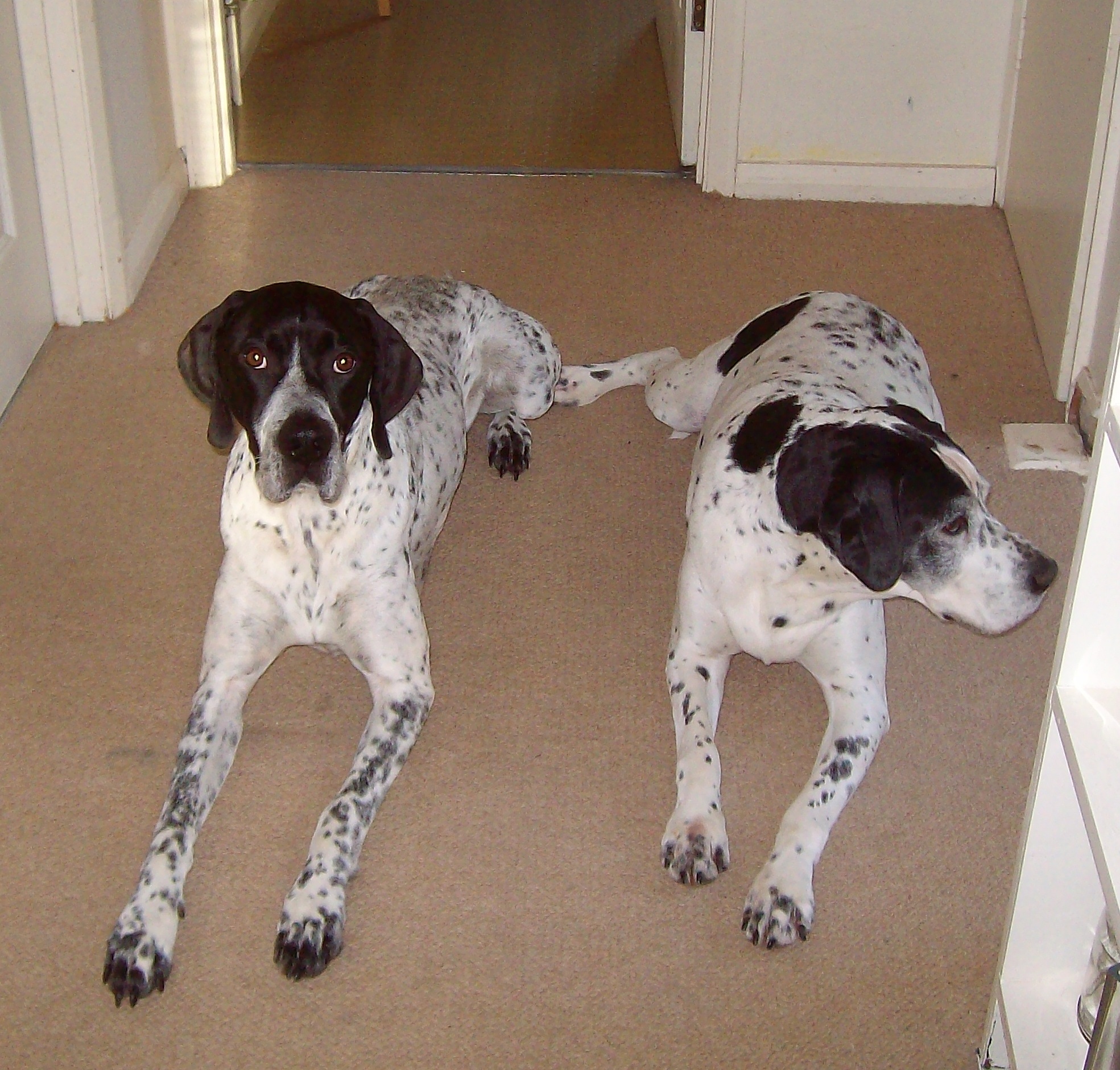
Fifty (on left) and Lotte - temporary Writer's Dogs
Fifty (on left) and Lotte – temporary Writer’s Dogs

I had Gonzo for too few years and this week I am delighted to say I have Fifty and Lotte here as honorary writer’s dogs. The “writer’s dog” is a well-known notion, but what exactly is the role of the canine companion for a writer?
Well, for a start, a dog gives you somebody to talk, and even read to – and they are hardly critical at all! They help you feel you are not alone in the world, facing an army of hostile critics, unhelpful agents, demanding publishers and whooshing deadlines (© D. Adams). As a living, breathing, yawning (often farting) being your dog connects you with a world that is larger than the inside of the skull that you live in most of your time – which has a nasty habit of being both too constrictive and infinite at the same time.

Dogs make you move. Not excessively so, but the occasional trip to see what they are barking about is a good way to keep the circulation going. New research has shown that the majority of writers who do not move are dead. This is bad for a writer, although it can be good for sales. It is very bad for aspiring writers.

Dogs need walkies. Walking is an extended form of movement that is very good for writers too. Although it takes them away from their computer/word processor/typewriter/pen/pencil or quill/slate – slate being the choice for real hard core traditionalists. Walking can provide some much-needed thinking, or even inspiration, time. Ideas, characters and plots can come together when you walk in the most opportune of manners.

Also, collected poo in a bag is a very good metaphor for what most writers have to face in their chosen profession. Above all though a dog gives a writer what they probably are really looking for in life: indiscriminate adoration. If only dogs bought books.

Got to go. Lotte is grumbling at Fifty about something. Ah, movement – thank you writer’s dogs.

My original writer’s dog Gonzo: Continue reading The Writer’s Dog

My other job is a writer (as well)

In my ‘other job’, as a script consultant and scriptwriter, I have been lucky enough to be involved in some great shows, including musicals, animated films, TV shows and live-action films. It’s great to see project come to completion and know that you have helped it along the way on that difficult journey.

chasing-robert-barker-itunes

It’s really exciting then to see that one of the feature films I have been involved with, ‘Chasing Robert Barker’ is now available on VOD channels such as itunes. This was a real labour of love for the team who all deserve congratulations for their hard work and shows what can be achieved on even a very modest budget when talent and enthusiasm are involved. I am particularly delighted for the principle writers, Maria and Daniel (who also directed brilliantly) for having the vision and determination to see their project through to completion.

I love writing novels and my own scripts of course, but I also love helping people with their projects too and sometimes I do also love that feeling of being part of a dedicated team.

Continue reading My other job is a writer (as well)

Happy Hogswatch! The problem with Fantasy Holidays.

Happy Hogswatch – the problem with Fantasy Holidays.

Fantasy holidays, by which I don’t mean a month in the Seychelles, but a holiday set in a fantasyland, can be quite trick. Actually I had a month in the Seychelles once and it was a lovely place, but I could never get over the fact that they had ‘Bus Stop’s written on the road. Not randomly, at actual bus stops, but it made the Seychelles just slightly like a tropical Croydon.

Holidays in fantasylands then, as I realised recently, are difficult to set up. Except for Hogswatch of course. Hogswatch, and the scary Santa that is the Hogfather, are fantastically realised by Sir Terry because they are actually what the story is about (mostly). If, as a writer, you just want to slip a holiday into your story – along the way as it were – then it’s harder. The reason is that holidays are events with long histories that are steeped in a society or culture’s history. Christmas didn’t happen overnight after all, and neither did Hanukkah or Diwali.Detective with snow

As a writer you need to embed your holidays in your world’s culture. You are generally OK handling a ‘mid-summer’ or even a ‘mid-winter’ festival, but New Years can be tricky. I’m, still rather in favour with a new year starting on the first day of spring myself. Such seasonal events are relatively straightforward although they can appear a bit ‘weak’ and unimaginative. Other events need careful thinking about because they might bring up the dreaded subject of religion and religion in your fantasy books is something you may not want to get into.

In Narnia, famously, it was always winter but never Christmas. But as the Witch’s hold is weakened along comes Father Christmas, but shouldn’t he actually be Father Aslanmas?

You might not want to go there. Just think how ‘Game of Thrones’ would have suffered with a tagline of ‘Christmas is Coming.’ Not the same is it?

So, I think I might be writing a ‘Winterfest’, unless inspiration strikes. Until then: Continue reading Happy Hogswatch! The problem with Fantasy Holidays.

The Good, the Bad and the Elvish


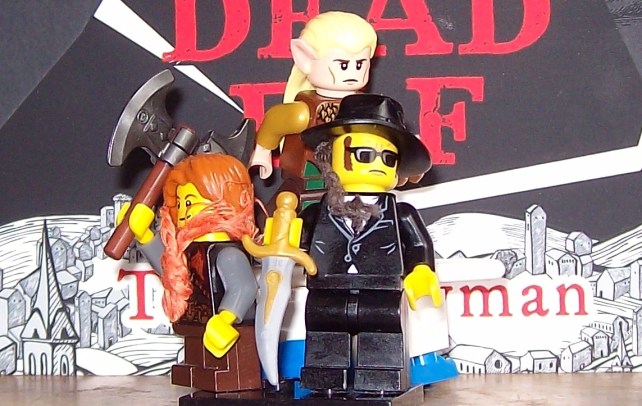
nicely-group-shot-cropped

Elves, you just have to love them, don’t you? I mean, with their natural in-born nobility, un-specified magical powers, tall blond looks, high cheekbones and pointy ears, what’s not to like? No wonder that the most unfairly maligned of youth cults, the peace-loving hippies, was so taken by them. Unless, of course, your elves happen to be small enslaved domestic helpers with no dress sense and a habit of talking about themselves in the third person: “Blobby wear sack now”. Or perhaps you’re still hooked on the idea that Santa Claus keeps legions of relatively magic-free green and red clad elves to help assemble Smartphones and games machines in the frozen wastes somewhere north of the place they filmed ‘The Killing’.

Then again, if you ever had the misfortune to share 89 minutes (feels like longer) with TV’s Dan “Grizzly Adams” Haggerty you might think ‘Elves’ (1989) are all about a neo-Nazi plot to create half-human/half-elf hybrids that were Hitler’s original idea for a master race. An idea inexplicably left out of most histories of World War II. Not forgetting the Dark Elves who gave Marvel’s Thor such a bad time in ‘Thor: The Dark World’ (2013) with their leader Malekith the Accursed who managed to look almost nothing like the actor Christopher Eccleston. Elves with high technology, there’s a new thing (or is it?).

It doesn’t really matter though, because they’re all elves now (OK, with the exception of the half-human master race) and elves have always been the trickiest of supernatural creatures to pin down. Even the Christmas elves are welcome to the fold and they seem to have their origins in illustrations that appeared in the American “Godey’s Lady’s Book”, a successful monthly magazine published in Philadelphia in the 1860s. Although the diminutive, gift-giving, white bearded ‘tomte’ from Sweden seem to fit that Xmas elf bill pretty closely too, giving rise to the possibility that Santa himself may be an elf.

The Old English ælf also had a ‘difficult’ relationship with people and any interaction could be to the person’s advantage –gifts yes please!-or severe disadvantage (where’s me cow). Partly depending on whether you were mixing it with the light elves or dark elves of course (very little good news with the dark elves actually). The dark elves weren’t a Marvel invention, but part of the Norse elf origin story. Called the Dökkálfar they tended towards a subterranean life style while the light elves, the Ljósálfar, lived in a rather nice place called Álfheimr (Old Norse ‘Elf Home’). The light elves took out the first patent on the blond, high cheekbone routine, being ‘fairer than the sun to look at’. This idea carried over into Scottish myths and the ‘Seelie’ and ‘Unseelie’ courts. The ‘Seelie’ court could do you a power of good, although annoying them, say by spilling slops into their houses, could also lead to the appropriate chastisement. The Unseelie court, which also included sluagh, redcaps, baobhan sith, shellycoats and nucklelavee amongst their number, just had it in for people.

Here though we reach contentious ground: when is an elf an elf and when is an elf a fairy? In England the light elves tended to be very similar to the fairies of Shakespearean fame – Titania’s hangers on. These would often be called elves as when Titania mentions ‘my small elves coats’. In Scotland elves were more likely to be human sized and lived in Elfame and that has certainly influenced one strong fantasy strand we know about.

In Scandinavia, life became more complicated when elves became mixed up with the huldre folk. These were originally more like forest spirits, usually female and associated with agriculture and women’s crafts. Although rather helpful, they’d take care of charcoal burner fires for example, they were also liable to kill your cattle and steal your children. And although the huldre women were very beautiful they did have cow’s tails (best not to mention it though, they got touchy).

In Iceland their elves, Huldufólk, have never gone away. Very much a part of life in fact and earlier this year plans to build a new road ran into trouble when campaigners warned that the road works would disturb elves living nearby. Construction work had to be halted, of course, while a solution was found.

So it seems that, love them or hate them, elves are not going to go away especially in our popular culture. They may pop up in different guises and sizes but the need for some ‘magical’ other to share our lives with seems very strong. Elves are here to stay – much to the annoyance of many dwarfs that I could mention.

Continue reading The Good, the Bad and the Elvish